With the passing of Charlie Kirk, many people have started this saying, “I am Charlie Kirk,” or “we are all Charlie Kirk.” I love the sentiment, and I understand the movement in their hearts that have brought them to make that claim. However, I would like to take a closer look at just one aspect of how we must “be” in order to say that we are like Charlie.
At the memorial service, Charlie’s wife Erika spoke of the time when Charlie was addressing a crowd and he boldly made the statement, “Here I am, Lord, send me!” She said after he spoke, she told him she wished he would have shared what he was going to say before he said it. She made the statement that if you make that claim, “here I am, send me” to the Lord, then He (God) will take you up on it. God did take Charlie up on his bold statement.
In the Bible where the Hebrew word “hineni” is used, it is more than the “here” someone will say when answering a roll call. The word hineni means being fully present in every way. It means being ready to listen well, to be attentive. It means to be ready to commit and submit to whatever is asked. It is not like someone coming up to you and speaking, and you are half listening while part of your attention is elsewhere. It is the setting aside of everything, leaning in to catch every word being spoken, and then immediately obeying whatever action or request was made of you. The speaker has your full attention and your full devotion of all your senses.
This word is found three times in Genesis 22. It is found first, when God calls to Abraham and asks him to sacrifice his son. Secondly it is found when Isaac asks Abraham a question. Then thirdly when the angel of the Lord stops Abraham from sacrificing Isaac. In each of these occasions, Abraham was fully giving his attention to the Lord and to his son. (There is much more to that story than can be covered here.)
Hineni is also used in Exodus 3, when the angel of the Lord calls Moses from the burning bush and Moses answers Him. That was the point in Moses’ life that changed him and his life forever. We then find the word used in 1 Samuel 3 in the story of God calling Samuel.
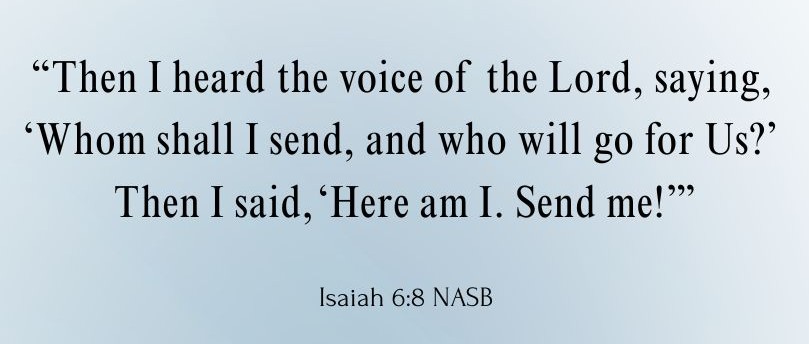
We also find hineni in the verse Charlie Kirk spoke of in Isaiah 6:8:
“Then I heard the voice of the Lord, saying, ‘Whom shall I send, and who will go for Us?’ Then I said, ‘Here am I. Send me!’” Isaiah 6:8 NASB
It is in this passage where we see the commissioning of Isaiah for the work God had for him. This passage is also what many people will reference and cling to when they feel they are answering a call to serve the Lord. And that is certainly a good thing…if people will stop and really consider the depths of what they are saying.
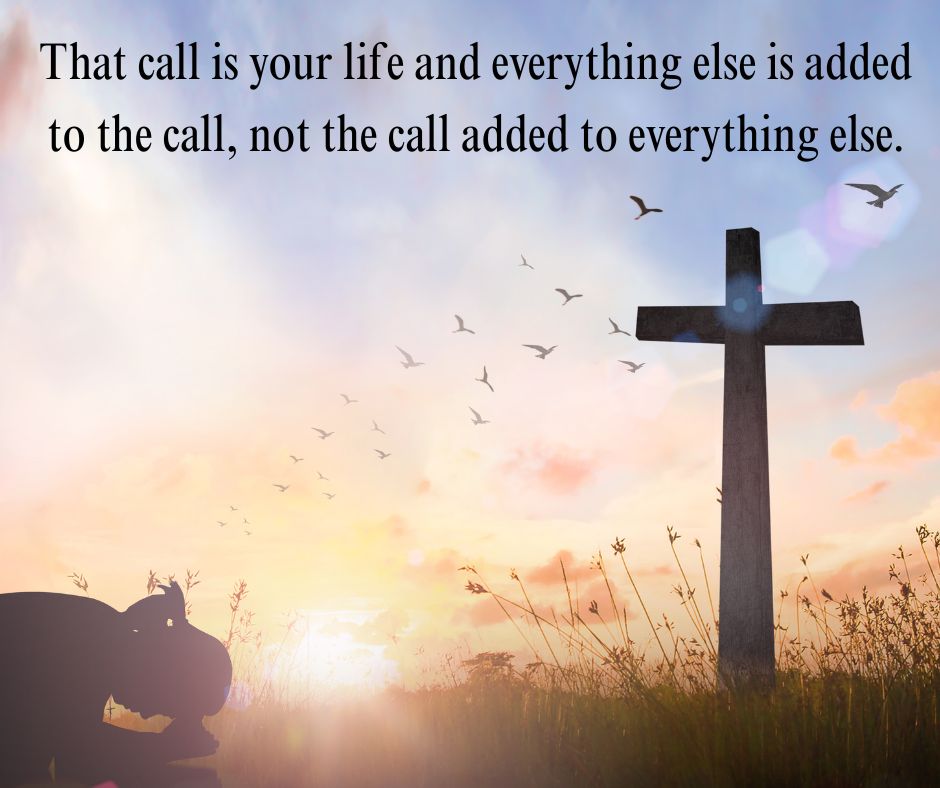
This answer, this “here I am” moment, is not the answer of the casual heart intellectually responding to a call just so that a response can be given, like the “here” in answer to a roll call. This response demands a thorough and complete understanding of what is being asked. It demands attention, not just intellectually, but with all of the heart, soul, and mind. It requires a weighing of what is being asked, of what it will require, and what may need to be sacrificed. Then it requires a full surrender, again, not just with the mind, but with the entire life of the one responding. It is not like adding a task onto an already full life. The answer to that call is to make that call the very essence of your whole being. That call is your life and everything else is added to the call, not the call added to everything else.
For example, when a person feels the drawing of the Holy Spirit in their life and they respond in repentance and faith, we say they are a new creation, the old has passed and they have been born again. That also means a full surrender to God. He has become that person’s Savior, but He is also the Lord of their life. That person has died to themselves and given up all control to the One to Whom they have committed their life. Being partially saved is not an option. You either fully surrender, or you have not surrendered at all.
The “here I am” answer to a call is the same. You do not just obey God when it is easy, but you obey when it is hard. You obey if He allows you to continue your profession in your chosen field, and you obey if He asks you to leave everything and go to a mission field. You follow Him as an “ordinary” daily disciple, witnessing to those you meet as you go about a normal life, and you follow Him to speak to thousands, laying your life on the line. Whatever kind of life He has asked you to lead, you say, “Here I am, send me.” That is the type of surrender Charlie Kirk had to the Lord. Full, total, and complete.
My challenge to all, including myself, is that before you say, “I am Charlie Kirk,” ask yourself how much you are willing to give. Then, do not make that profession for Charlie, but for and unto the Lord. God is the One Who asked the question. Charlie responded and gave his all. How much are you willing to give to the Lord? You can either say, “I’m here, present,” or you can say, “hineni – here I am, send me.”